A commercial repaint is a different job from a residential one long before a roller touches the wall. The building is taller, the surfaces are more varied, and the work usually has to happen without shutting the business down. Here is a look at what actually goes into one of our commercial projects, from access to final coat.
Getting Safe Access First
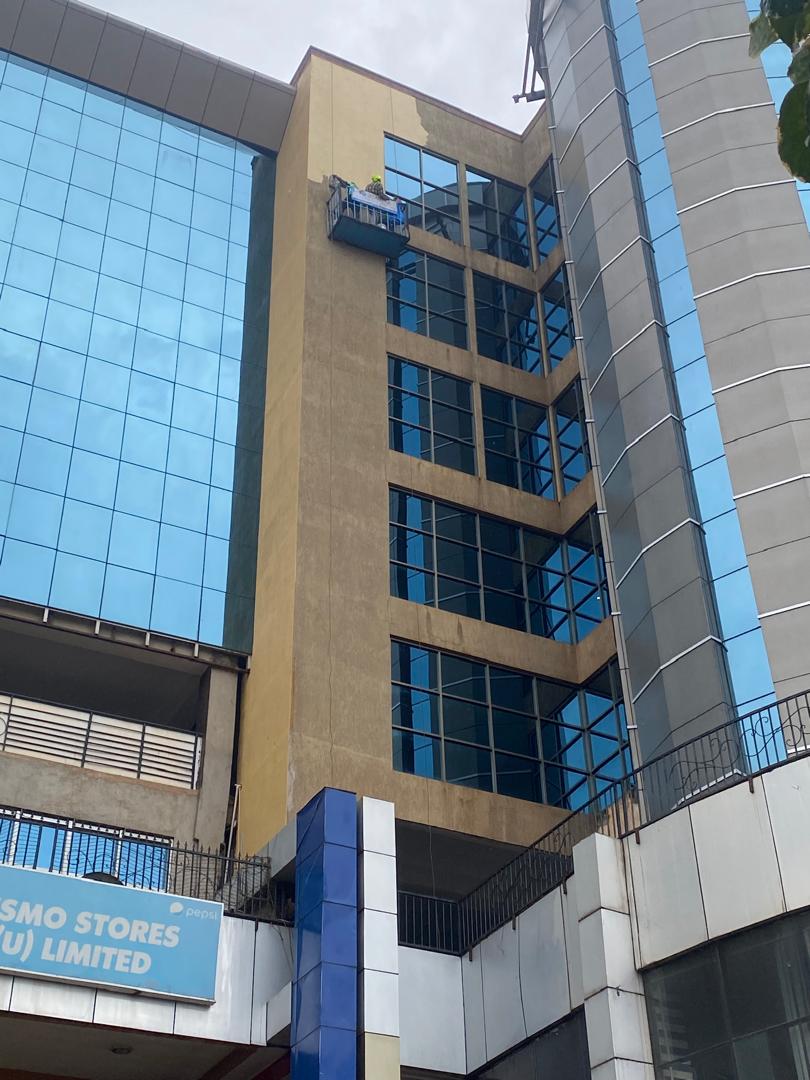
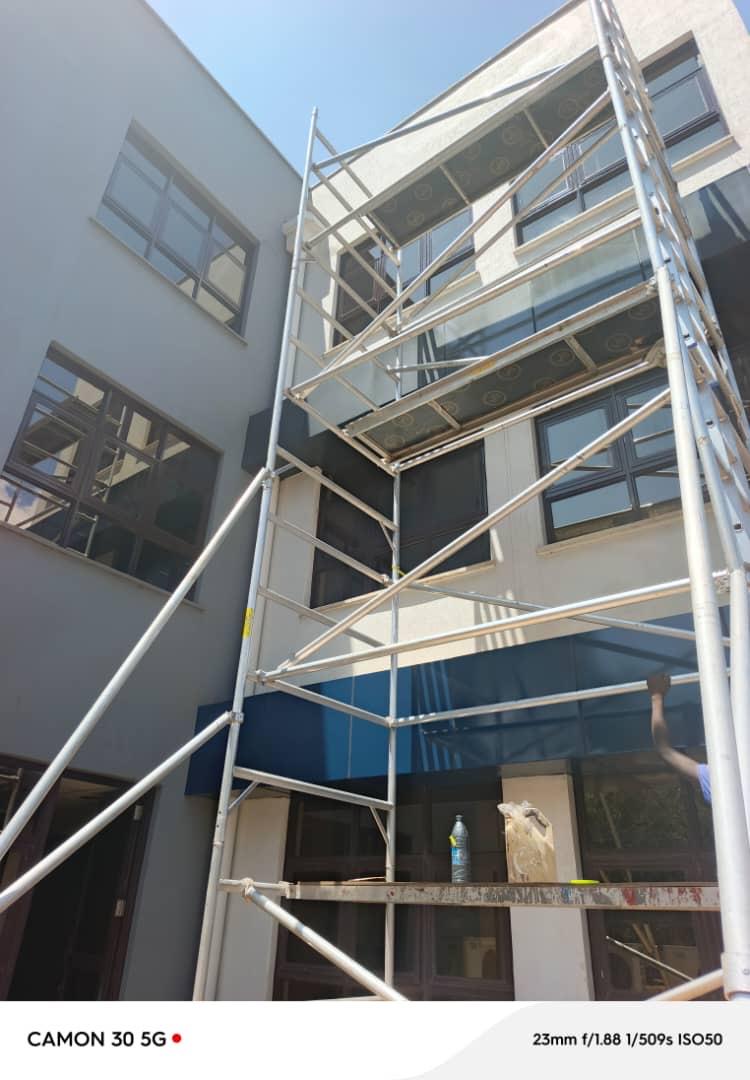
Before any surface prep begins, the team has to solve the access problem, and it is different for every building. A single-storey showroom might only need a stepladder. A four-storey office block calls for a mobile aluminium tower scaffold that gets walked into position and rebuilt floor by floor. A glass-clad high-rise, where there is no wall to lean a ladder against, needs a suspended cradle rigged from the roof so painters can work window by window on the way down. Getting this stage right is what makes the rest of the job possible, and safe.
Masking And Prep Before A Single Coat Goes On
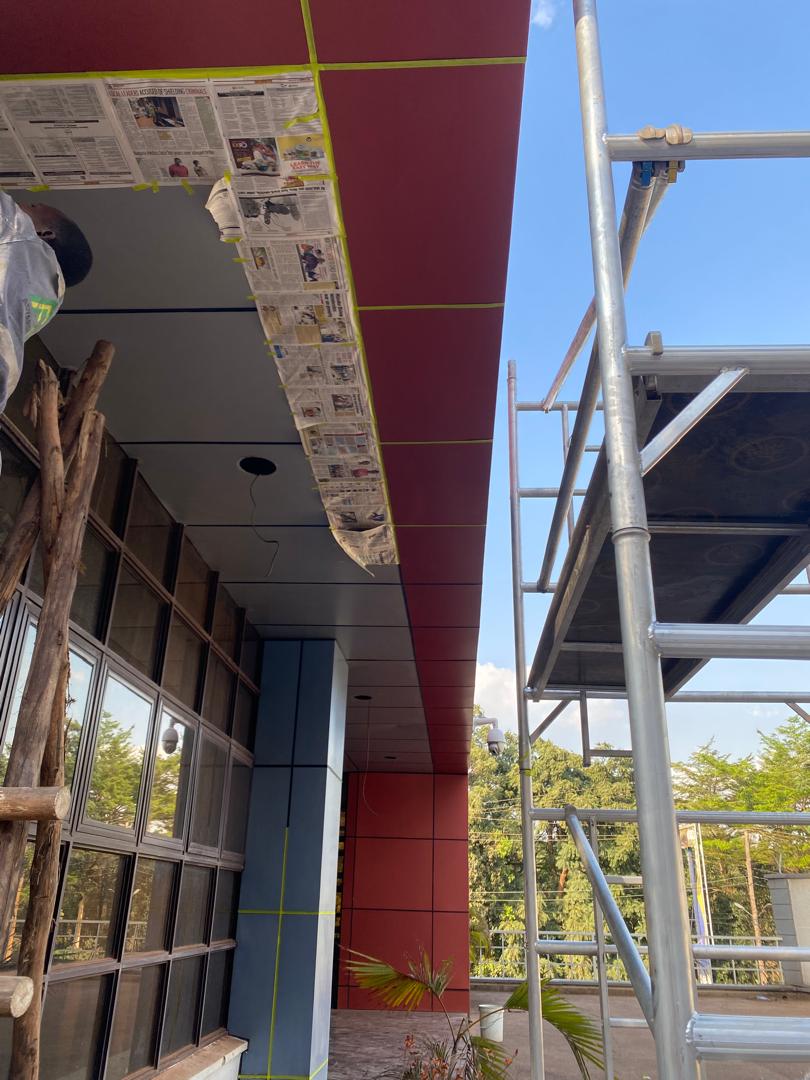
Commercial facades mix materials in a way most homes do not: glass, aluminium composite cladding, signage, and render can all sit side by side on the same wall. Every edge that should not get paint on it, window frames, ACP cladding joints, branded signage, gets taped and covered before spraying or rolling starts. It looks slow and fiddly in the moment, but it is what gives a finished canopy or fascia its crisp, straight lines instead of a paint job that bleeds into the glass.
Matching The Product To The Surface
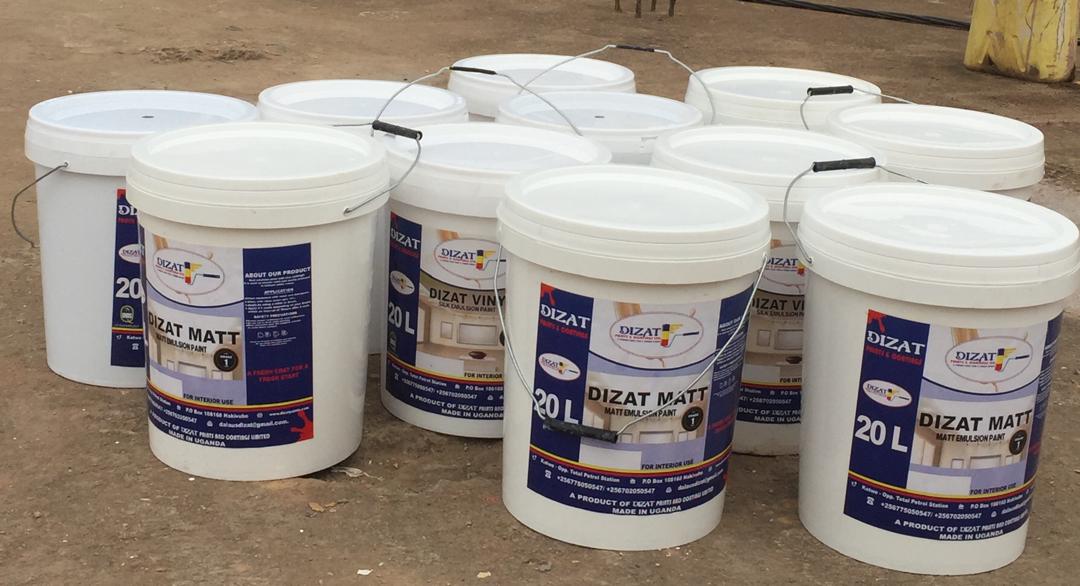
Not every part of a commercial building takes the same coating. Render, previously painted masonry, and interior showroom walls each call for a different product from the Dizat range, whether that is Weatherguard for an exposed exterior, Vinyl silk emulsion for a wall that needs to wipe clean, or Matt for a ceiling or low-traffic interior. Buckets are labelled and staged on site by area before work starts, so the right product goes on the right surface first time.
One Job, Many Trades On Site
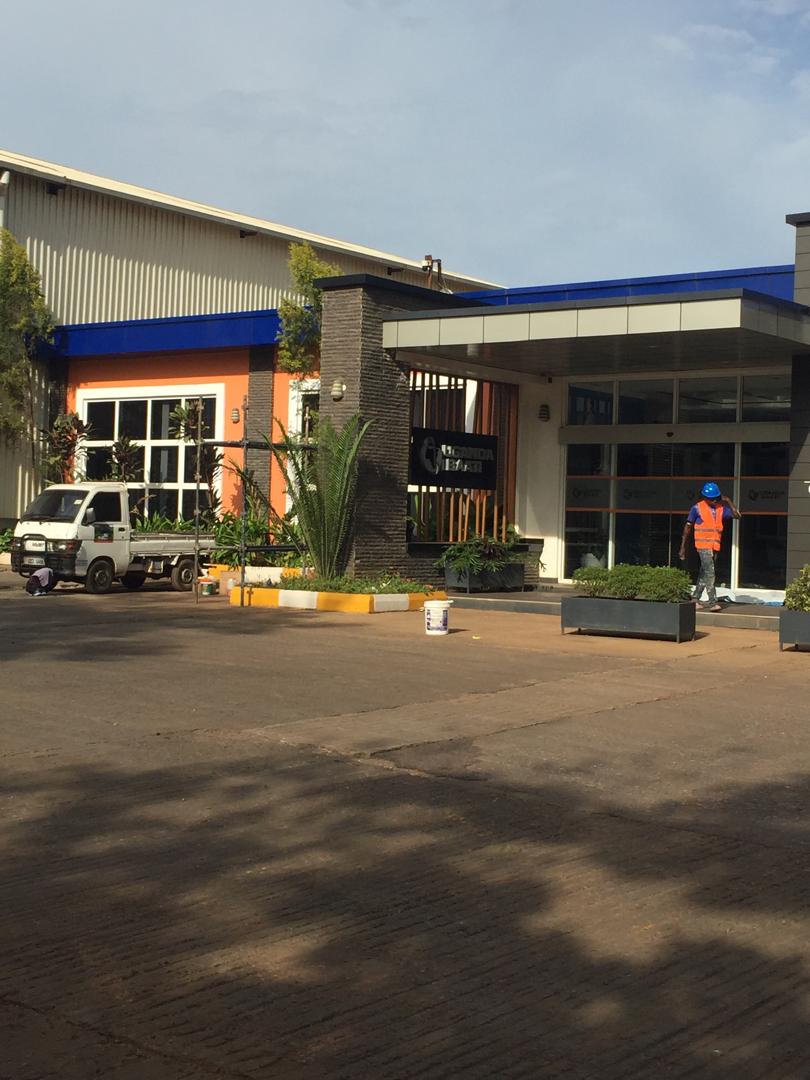
On a working commercial site, painting rarely happens in isolation. A showroom fit-out like the one we completed for Uganda Baati involved exterior repainting, signage-safe masking, and interior finishing, all coordinated so the business could keep operating around the work. It is the same logic whether the job is a single bungalow or a multi-storey office tower: sequence the trades, protect what should not be painted, and keep the finish consistent from the ground floor to the roofline.
Every commercial project we take on gets this same groundwork before a finish coat is even considered, regardless of the building's size. If you are planning a repaint for an office, showroom, or commercial block in Kampala, talk to us early about access and product selection; getting those two decisions right is most of what makes the finished job last.