
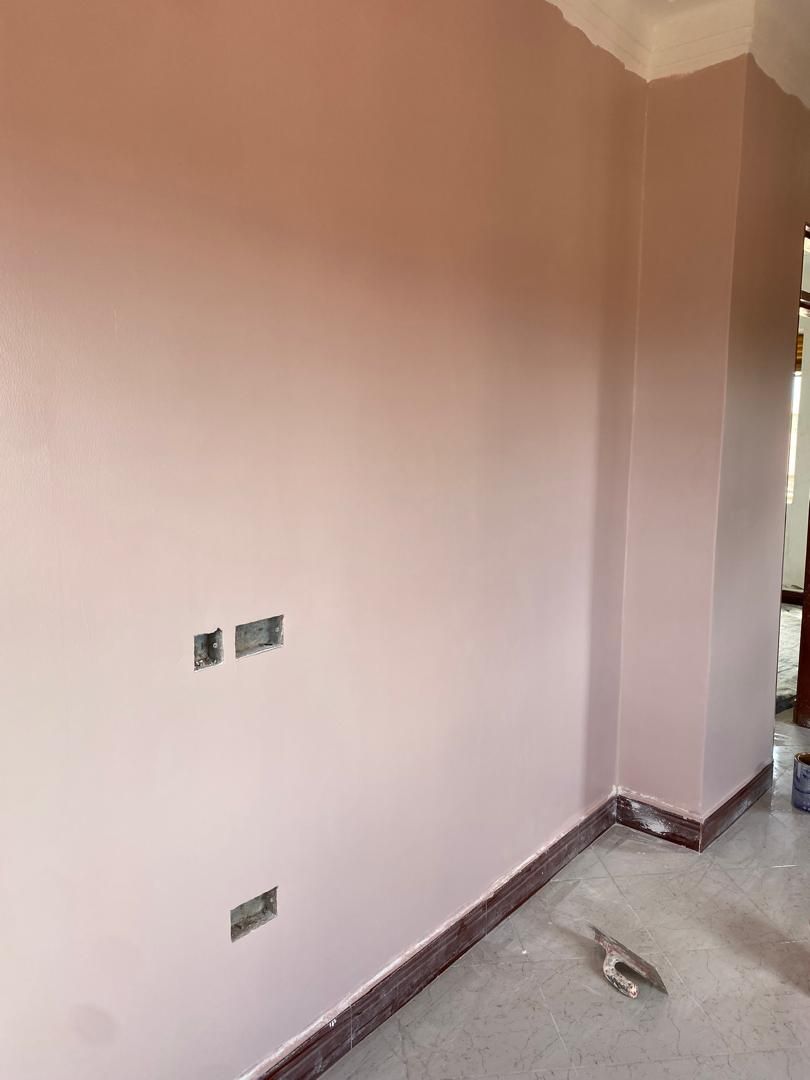
Most paint jobs that fail early do not fail because of the paint. They fail because the wall underneath was not ready for it. Preparation is unglamorous and it is also the single biggest factor in how long a new coat lasts.
Start with a clean, dry surface
Dust, grease, and old flaking paint all stop a new coat from bonding properly. Wipe walls down and let them dry fully before you open a tin. In kitchens and bathrooms, pay particular attention to grease build-up near cooking areas and condensation near showers.
Fill, sand, and check for damp
Cracks and small holes should be filled and sanded smooth before painting; paint will not hide a crack, it will just show you exactly where it is. If you find soft, damp, or discoloured patches, deal with the underlying moisture problem first. Painting over damp plaster is a temporary fix at best.
Prime bare or patched areas
Anywhere you have filled, sanded back to bare plaster, or covered a strong existing colour, an undercoat gives the top coat a consistent surface to grip and read colour evenly. Skipping this step is the most common reason a new colour looks patchy after the first coat.
Protect what you are not painting
Mask skirting boards, switch plates, and floors before you start. It takes longer to clean paint off a floor than it does to tape it down properly in the first place.
A short checklist
- Clean the surface and let it dry fully.
- Fill cracks and holes, then sand smooth.
- Resolve any damp or mould before painting over it.
- Prime bare patches and areas with a strong existing colour.
- Mask trim, switches, and floors.
Once the surface is genuinely ready, the paint itself does the easy part.